
E1 on a CrossWave OmniForce 3882 or 3883 points to restricted suction from the dirty tank, port, filter or debris path. Separate tank seating, liquid flow, suction and brush drive before ordering a part. Empty dirty water, keep electrical areas dry and run only the short test described for this exact model family. What the alert means: The machine detects inadequate airflow when the dirty tank is full or mis-seated, the suction port is packed or the filter is restricted. What to distinguish first: E1 is a suction or clog warning; do not confuse it with E2, which directs attention to a stuck brush roll. 1. Confirm the exact symptom — The machine detects inadequate airflow when the dirty tank is full or mis-seated, the suction port is packed or the filter is restricted. 2. Prepare safely — Switch off, unplug the charger and empty both tanks before removing a roller, filter or floorhead cover. 3. Apply the official check — Empty and reseat the dirty tank, clean its filter and suction port, remove visible debris and run the documented clean-out cycle. 4. Interpret one retest — Run a short pickup test. If E1 returns with a clean dry filter and open path, stop and ask Bissell to inspect suction. The official Bissell procedure identifies this exact symptom and supports the checks above. Keep the charging port and motor vents dry, and never clear a blockage while the appliance can start. Stop for a damaged tank, battery heat, electrical smell, persistent leak or an error that returns after one clean test.
Models covered
- Bissell CrossWave OmniForce 3882 · 3882
- Bissell CrossWave OmniForce 3883 · 3883
Safety first
- Keep the charging port and motor vents dry, and never clear a blockage while the appliance can start.
What the symptom may indicate
Checks in the right order
- Confirm the exact symptom
The machine detects inadequate airflow when the dirty tank is full or mis-seated, the suction port is packed or the filter is restricted.
- Prepare safely
Switch off, unplug the charger and empty both tanks before removing a roller, filter or floorhead cover.
- Apply the official check
Empty and reseat the dirty tank, clean its filter and suction port, remove visible debris and run the documented clean-out cycle.
- Interpret one retest
Run a short pickup test. If E1 returns with a clean dry filter and open path, stop and ask Bissell to inspect suction.
Stop and get qualified help when
- Stop for a damaged tank, battery heat, electrical smell, persistent leak or an error that returns after one clean test.
Next step
Repair, replace a part, or arrange a diagnosis?
Use the checks and stop conditions above to choose a cautious next step. A symptom alone never proves that the appliance has failed.
Resolve it without buying anything
Complete the 4 user-accessible checks in order. If normal operation returns and no warning sign remains, no replacement is indicated.
Replace only the confirmed part
If the checks isolate a worn or blocked component, match its complete reference to the exact appliance model before ordering.
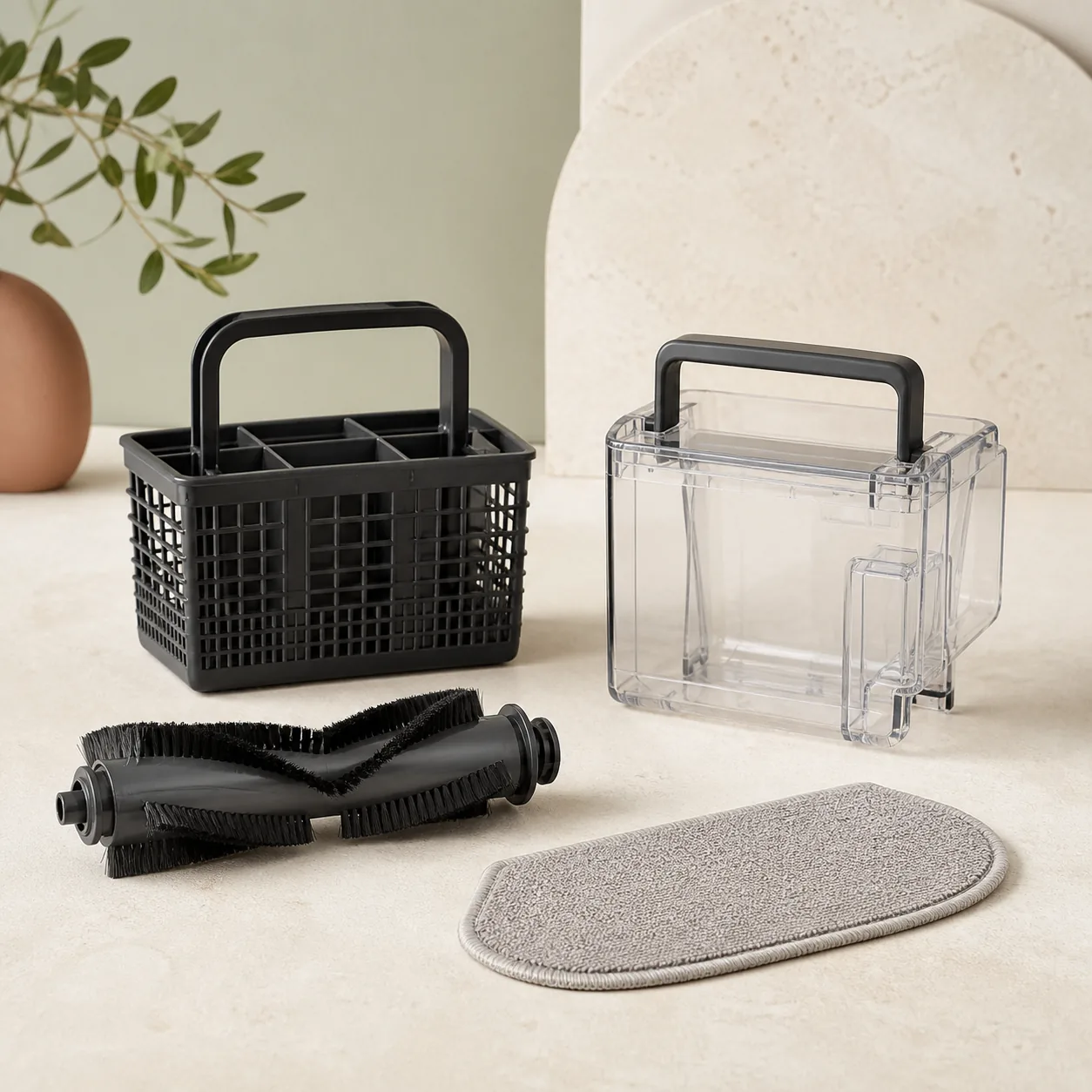
Bissell CrossWave OmniForce filter
Bissell official crosswave omniforce filter, reference 1640065. Compatibility is published only for the exact appliance codes explicitly listed by the manufacturer source.
Amazon results are not a compatibility confirmation.Arrange a diagnosis before replacing the appliance
Stop at any warning sign listed above. A qualified diagnosis should confirm that repair is unsafe, unavailable or uneconomical before an appliance replacement is considered.
Sources used
- Bissell — The official Bissell procedure identifies this exact symptom and supports the checks above.
Last checked: 30 August 2026