
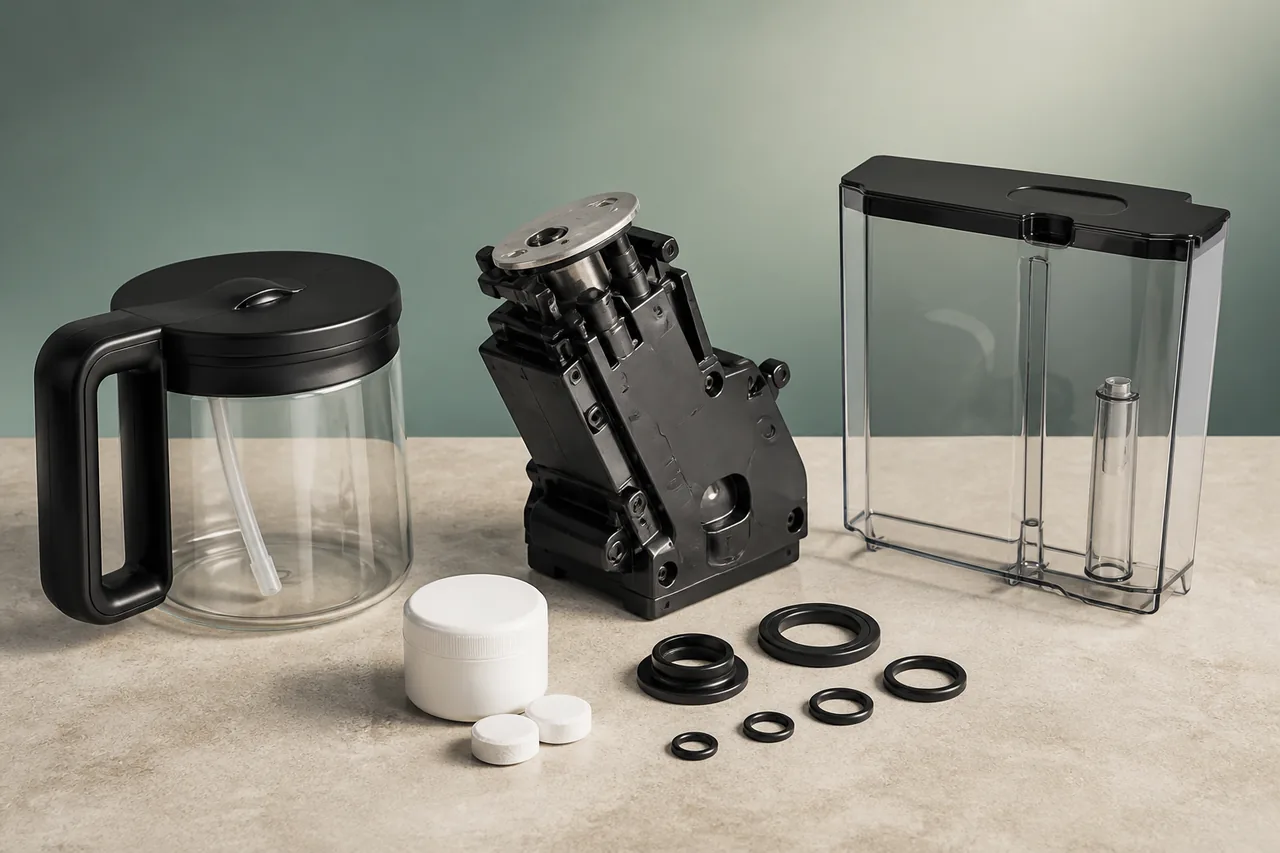
ECF02 espresso machine ECF02WHUS: A dry or unseated tank and air in the inlet can make the pump loud; continued dry running can damage it. Stop immediately, fill and firmly seat the tank, confirm its valve opens and prime only with the manual’s water-delivery procedure; stop for service if flow does not return promptly. Preserve the exact words, code, timing and drink before changing anything: a similar symptom can have a different cause. Keep hands clear of hot water, steam, the grinder and moving brew mechanisms. Switch off and unplug before removing a user-removable unit, and never open an electrical, boiler, pump or grinder cover. Perform the documented check once, then use the result to decide between a resolved user condition and authorised service. Do not order a pump, grinder, valve, heater or control board from this symptom alone.
Models covered
Safety first
- Keep hands clear of hot water, steam, the grinder and moving brew mechanisms. Switch off and unplug before removing a user-removable unit, and never open an electrical, boiler, pump or grinder cover.
What the symptom may indicate
Checks in the right order
- Preserve the exact evidence
Photograph or write down “Pump is unusually loud and no water flows”, the selected drink and what happened immediately before it.
- Make the machine safe
Keep hands clear of hot water, steam, the grinder and moving brew mechanisms. Switch off and unplug before removing a user-removable unit, and never open an electrical, boiler, pump or grinder cover.
- Apply the manufacturer’s user check
Stop immediately, fill and firmly seat the tank, confirm its valve opens and prime only with the manual’s water-delivery procedure; stop for service if flow does not return promptly.
- Decide after one controlled test
If the exact symptom clears, observe one normal drink. If it returns, keep the evidence and contact the manufacturer rather than repeating resets or guessing a part.
Stop and get qualified help when
- Stop immediately for a hot plug, damaged cable, burning smell, smoke, uncontrolled heating, water near electrical parts, a forcefully moving portafilter or any exact fault that returns after the one documented check.
Next step
Repair, replace a part, or arrange a diagnosis?
Use the checks and stop conditions above to choose a cautious next step. A symptom alone never proves that the appliance has failed.
Resolve it without buying anything
Complete the 4 user-accessible checks in order. If normal operation returns and no warning sign remains, no replacement is indicated.
Replace only the confirmed part
If the checks isolate a worn or blocked component, match its complete reference to the exact appliance model before ordering.
This guide does not identify a replacement part. Do not order a generic component from the symptom alone.
Arrange a diagnosis before replacing the appliance
Stop at any warning sign listed above. A qualified diagnosis should confirm that repair is unsafe, unavailable or uneconomical before an appliance replacement is considered.
Sources used
- Smeg — Smeg's official material documents “Pump is unusually loud and no water flows” or the exact symptom and the bounded user procedure retained here.
- Smeg — Smeg's official material documents “Pump is unusually loud and no water flows” or the exact symptom and the bounded user procedure retained here.
Last checked: 30 August 2026