
Models covered
- Kärcher FC 5 · FC 5
- Kärcher FC 5 Cordless · FC 5 Cordless
Parts
Parts and accessories for Kärcher Floor cleaner
Compare the documented references, including 2.055-006.0. Open the part details to check the complete model code, then view the retailer’s offer.
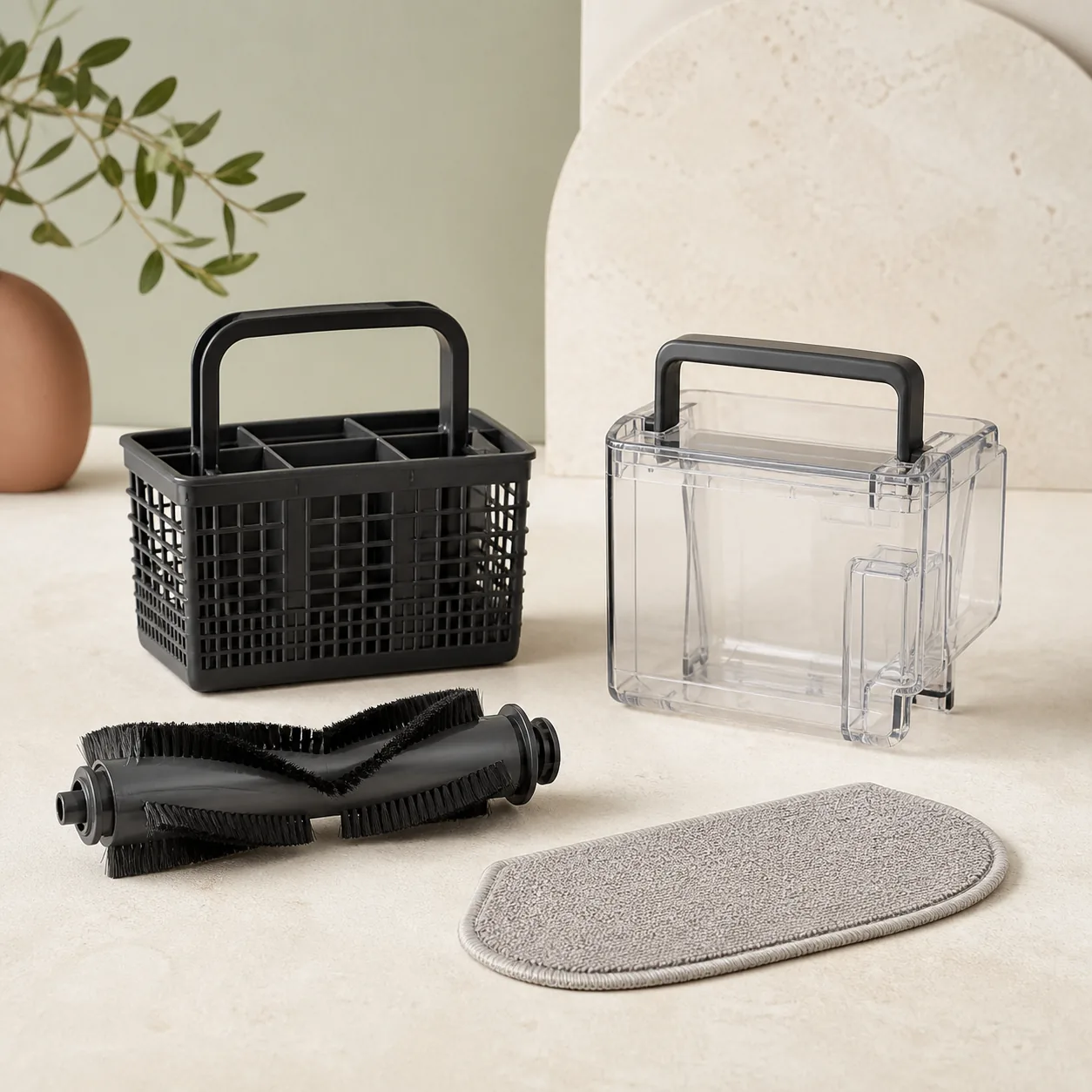
Kärcher Yellow multi-surface FC roller set
Kärcher official yellow multi-surface fc roller set, reference 2.055-006.0. Compatibility is published only for the exact appliance codes explicitly listed by the manufacturer source.
Before testing, read the label: FC 5 and FC 5 Cordless are different versions. Also identify the task: wetting dry rollers before cleaning is not the same operation as rinsing the machine after use. Those operations do not necessarily use the same water quantity or running time.
The US FAQ and the Cordless manual describe several sequences. Do not add their times together or automatically choose the longest. Follow the manual matching your complete appliance reference and the operation you need. Dry rollers alone do not identify a failed pump or prove that new rollers are needed. Make the maintenance check before choosing a replacement part.
Before checking Kärcher Floor cleaner
- Keep electrical connections and vents dry. Never touch rollers or clear a blockage while the appliance can start.
What this symptom can mean on Kärcher Floor cleaner
4 checks for Kärcher Floor cleaner, starting with Confirm the exact symptom
- Confirm the exact symptom
Air in the water circuit, an incorrectly fitted nozzle cover or a depressed release mechanism can interrupt flow to both rollers.
- Make the correct version safe
Switch off. For a corded FC 5, unplug the appliance from the mains. For FC 5 Cordless, disconnect the charger. Empty the tanks before laying the appliance down to remove rollers or the cover.
- Use the priming sequence in its manual
Refit removed components, fill the fresh-water tank and prepare the station as your manual specifies. Use its roller-wetting sequence; do not substitute a rinsing time for a priming time.
- Interpret one retest
Confirm both rollers moisten evenly. If flow is still absent with a correctly fitted cover, contact Kärcher rather than opening the pump.
When to stop checking Kärcher Floor cleaner
- Stop for damage, a persistent leak, electrical smell or unusual heat. If rollers stay dry after the appropriate check, contact Kärcher with the complete appliance reference.
Next step
After checking Kärcher Floor cleaner: repair, part or service?
Treat “Kärcher FC5 does not dispense water onto rollers” as a condition to verify. The first of the 4 documented checks is “Confirm the exact symptom”; its result guides what follows.
Finish the checks before buying
Complete the Kärcher Floor cleaner sequence, starting at “Confirm the exact symptom”. When the symptom clears without a remaining alert, no replacement is indicated.
Arrange a diagnosis if a stop condition appears
Do not condemn Kärcher Floor cleaner from “Kärcher FC5 does not dispense water onto rollers” alone. Stop at the warnings above and let a qualified diagnosis establish whether repair remains safe and proportionate.
Sources used
- Kärcher — The FAQ separates corded FC 5 and FC 5 Cordless; their roller-wetting sequences must not be merged.
- Kärcher — The FC 5 Cordless/Premium manual distinguishes initial roller wetting from the later rinsing cycle; use the sequence for the exact operation.
Last checked: 30 August 2026