
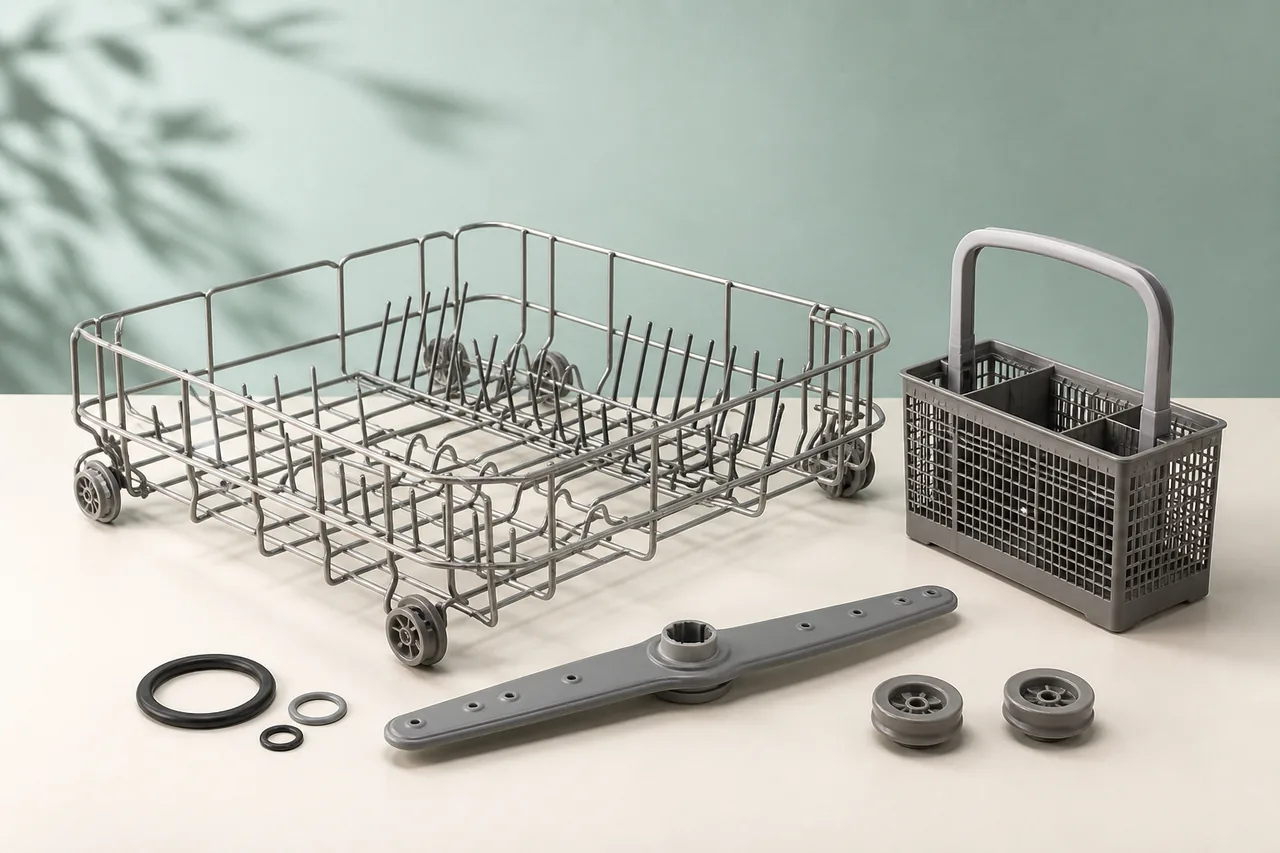
LG LDT7808SS.ASSESNA — Every dish is wet after the cycle. When plates, glasses and cookware are all wet, LG separates the complaint from normal wet plastics or condensation on tub walls and points first to rinse aid, options and airflow. Preserve the exact display, programme stage and behaviour before changing anything. Refill liquid rinse aid, choose Extra Dry or Night Dry when suitable, avoid nesting and unload the lower rack first; retest one full load before requesting service. Cancel the programme, isolate electrical power, close the water valve for any inlet or leak symptom and let the tub cool. Wear gloves near filters because hidden glass may be present; never tilt a built-in unit or open its base, door skin, pumps or wiring.
Models covered
Safety first
- Cancel the programme, isolate electrical power, close the water valve for any inlet or leak symptom and let the tub cool. Wear gloves near filters because hidden glass may be present; never tilt a built-in unit or open its base, door skin, pumps or wiring.
What the symptom may indicate
Checks in the right order
- Capture the starting point
Photograph or note “Every dish is wet after the cycle”, the selected programme, remaining water and what happened immediately before it.
- Make the appliance safe
Cancel the programme, isolate electrical power, close the water valve for any inlet or leak symptom and let the tub cool. Wear gloves near filters because hidden glass may be present; never tilt a built-in unit or open its base, door skin, pumps or wiring.
- Follow the official user check
Refill liquid rinse aid, choose Extra Dry or Night Dry when suitable, avoid nesting and unload the lower rack first; retest one full load before requesting service.
- Retest once and decide
If the exact condition clears, observe one supervised normal cycle. If it returns, preserve the evidence and use authorised service rather than repeating resets or guessing a part.
Stop and get qualified help when
- Stop immediately for smoke, burning smell, a hot plug, damaged cable, breaker trip, uncontrolled filling, water near electrics, an active leak, escaping steam or the exact fault returning after one documented test.
Next step
Repair, replace a part, or arrange a diagnosis?
Use the checks and stop conditions above to choose a cautious next step. A symptom alone never proves that the appliance has failed.
Resolve it without buying anything
Complete the 4 user-accessible checks in order. If normal operation returns and no warning sign remains, no replacement is indicated.
Replace only the confirmed part
If the checks isolate a worn or blocked component, match its complete reference to the exact appliance model before ordering.
This guide does not identify a replacement part. Do not order a generic component from the symptom alone.
Arrange a diagnosis before replacing the appliance
Stop at any warning sign listed above. A qualified diagnosis should confirm that repair is unsafe, unavailable or uneconomical before an appliance replacement is considered.
Sources used
- LG — LG's official manual, support article or exact model page documents “Every dish is wet after the cycle” and the bounded user action retained here.
- LG — LG's official manual, support article or exact model page documents “Every dish is wet after the cycle” and the bounded user action retained here.
- LG — LG's official manual, support article or exact model page documents “Every dish is wet after the cycle” and the bounded user action retained here.
Last checked: 30 August 2026