
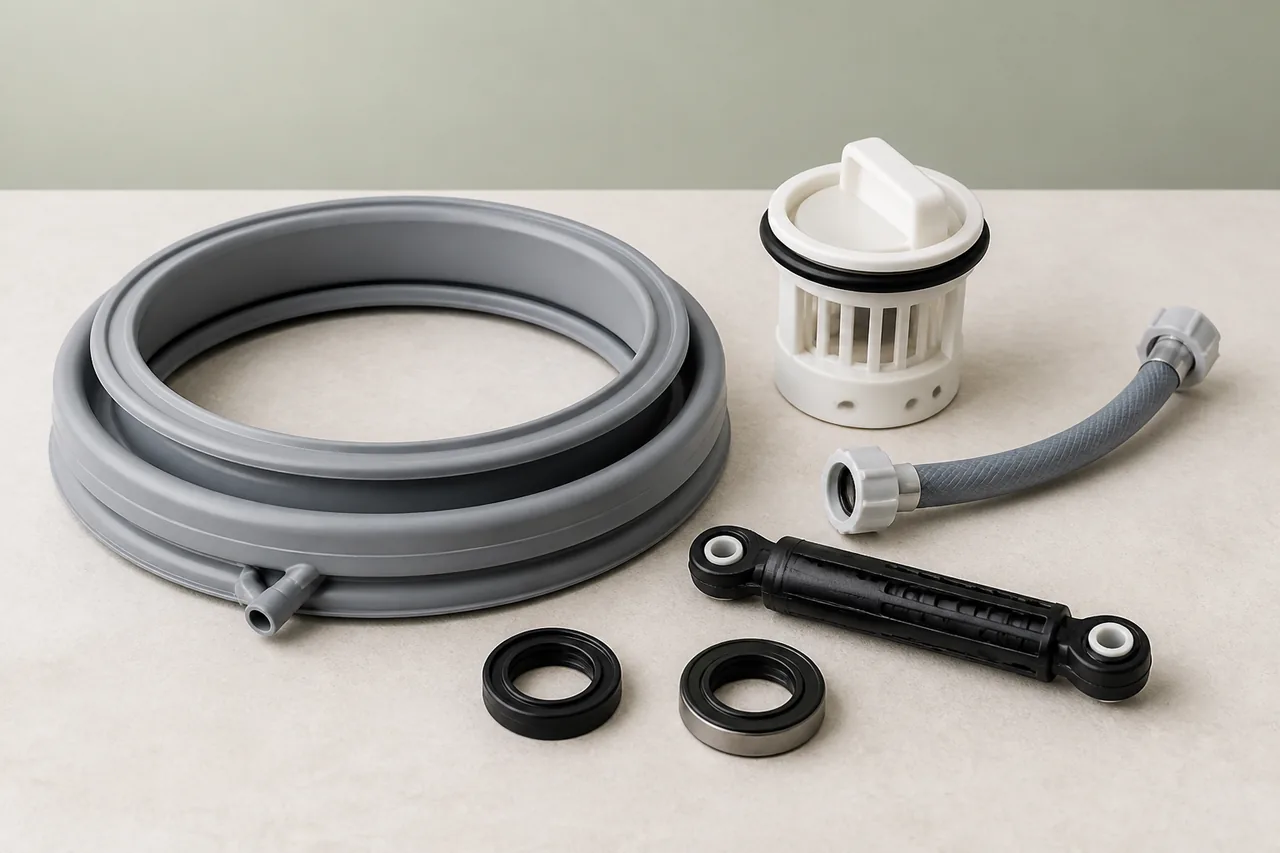
When an LG washing machine shows OE, drains very slowly or leaves standing water in the drum, follow the water path before assuming that the pump has failed. LG identifies three frequent causes: debris in the accessible drain-pump filter, a kinked or compressed drain hose, and freezing in cold conditions. A home drain can also be blocked even when the machine and pump are working.
Switch the washer off and unplug it before opening the lower service cover. Prepare a shallow container and towels because the emergency hose may release much more water than expected, and the water can be hot. Drain through the small residual-water hose before turning the pump-filter cap, then clean the removable filter and its accessible opening with a soft brush. Refit the hose plug and filter securely before testing.
Behind the machine, straighten a crushed hose and leave the clearance specified by LG; do not pull or position it in a way that creates a new kink. If a controlled spin test empties through the detached drain hose but the normal household connection backs up, the plumbing drain needs attention. If the washer still cannot drain after these checks, or the pump is silent, noisy or leaking, stop and request service instead of opening the pump or electrical cabinet.
Before checking LG Washing machine
- Residual water can be hot enough to burn and may spill quickly. Unplug first, let hot water cool, drain through the small hose in controlled stages and protect a vulnerable floor.
What this symptom can mean on LG Washing machine
5 checks for LG Washing machine, starting with Switch off, unplug and prepare
- Switch off, unplug and prepare
Turn the washer off, remove its plug and let hot wash water cool before opening the lower service panel. Place towels and a shallow container in front of the machine.
- Drain residual water first
Unclip the small emergency drain hose without pulling it too far, remove its plug and drain in stages into the container. Replace the plug only after the flow has stopped.
- Clean and secure the pump filter
Turn the accessible pump-filter cap counterclockwise, remove debris and clean the filter and opening with a soft-bristled brush and warm water. Reinsert and tighten it securely without forcing the threads.
- Straighten the drain hose
Check behind the washer for a kink, compression or freezing. LG advises about 4 inches or 10 centimetres between the washer and wall so the hose can drain freely.
- Test the machine and household drain
After every cap and hose is secure, run the documented spin test. If the washer discharges from its hose but the standpipe backs up, stop using that connection and have the household drain cleared.
When to stop checking LG Washing machine
- Stop for a damaged power cord, burning smell, smoke, active leak, repeated electrical trip or water near electrical parts. Do not restart the washer until it has been made safe.
- Request LG service if OE returns after the accessible filter and hose are clear, if the filter cap cannot seal, or if diagnosing the fault would require pump, cabinet or wiring disassembly.
Next step
After checking LG Washing machine: repair, part or service?
Treat “LG washing machine not draining or showing OE” as a condition to verify. The first of the 5 documented checks is “Switch off, unplug and prepare”; its result guides what follows.
Finish the checks before buying
Complete the LG Washing machine sequence, starting at “Switch off, unplug and prepare”. When the symptom clears without a remaining alert, no replacement is indicated.
Arrange a diagnosis if a stop condition appears
Do not condemn LG Washing machine from “LG washing machine not draining or showing OE” alone. Stop at the warnings above and let a qualified diagnosis establish whether repair remains safe and proportionate.
Sources used
- LG — LG identifies a clogged pump filter, kinked or compressed hose and freezing as OE causes, and documents residual-water draining, filter cleaning, clearance and the household-drain test.
Last checked: 29 August 2026