
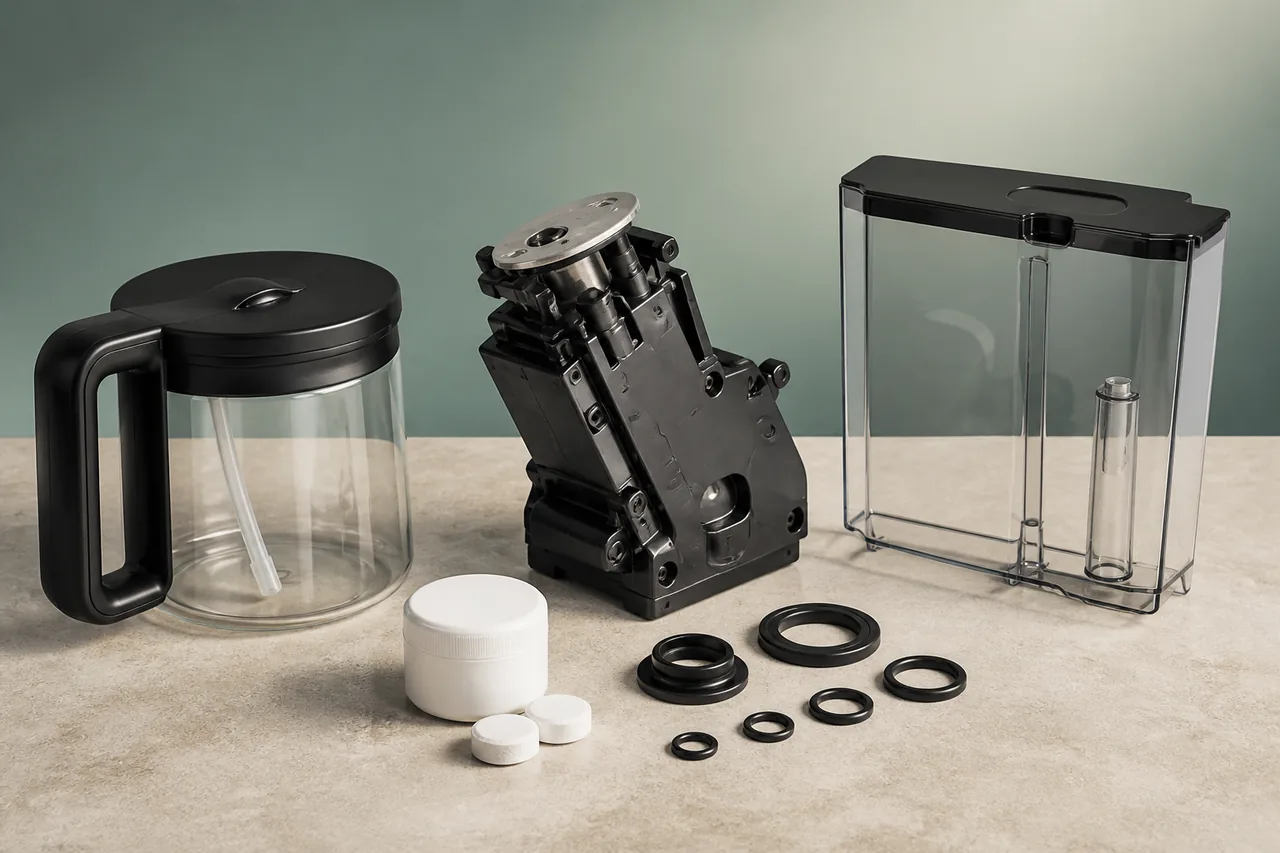
Models covered
Check that the rating label identifies Melitta Passione, then reproduce the exact “fill-water symbol stays on with a full tank” signal before changing settings. For Melitta Passione, stay with the removable brew, milk, water and drip-tray parts intended for routine user care. What this exact symptom means: the water tank may not be seated at the rear, so the machine cannot confirm its presence even though it contains water.
What to distinguish first: Confirm that the displayed or observed condition exactly matches “fill-water symbol stays on with a full tank” before changing anything. 1. Confirm the model and signal — Confirm that the displayed or observed condition exactly matches “fill-water symbol stays on with a full tank” before changing anything. 2. Prepare the appliance safely — Before opening an accessible area of Melitta Passione, complete shutdown, disconnect power, cool the hot-water path and empty the tray.
3. Carry out the official user check — Remove the tank, check the seating area for debris, refill with fresh water and press it straight down into its rear position. 4. Interpret one controlled retest — After reassembly, test Melitta Passione once under normal conditions. This sequence follows the official Melitta Passione guidance for the specific “fill-water symbol stays on with a full tank” condition.
Before checking Melitta Coffee machine
- On Melitta Passione, keep liquid away from the bean hopper, grinder and powered openings, and never force the brew unit, valve or hot-steam parts.
What this symptom can mean on Melitta Coffee machine
4 checks for Melitta Coffee machine, starting with Confirm the model and signal
- Confirm the model and signal
Confirm that the displayed or observed condition exactly matches “fill-water symbol stays on with a full tank” before changing anything.
- Prepare the appliance safely
Before opening an accessible area of Melitta Passione, complete shutdown, disconnect power, cool the hot-water path and empty the tray.
- Carry out the official user check
Remove the tank, check the seating area for debris, refill with fresh water and press it straight down into its rear position.
- Interpret one controlled retest
After reassembly, test Melitta Passione once under normal conditions. A second “fill-water symbol stays on with a full tank” signal after this check points to service, not repeated resets.
When to stop checking Melitta Coffee machine
- Stop using Melitta Passione and contact service if “fill-water symbol stays on with a full tank” returns after one correct cycle, or if there is a foreign object, hot leak or electrical trip.
Next step
What the Melitta Coffee machine checks lead to
The 4-check path for “Melitta Passione: fill-water symbol stays on with a full tank” starts with “Confirm the model and signal” and separates a resolved condition, an identified part and a case requiring service.
No purchase after a successful check
Follow the Melitta Coffee machine controls in order. If “Confirm the model and signal” and the remaining checks restore normal operation with no warning, stop without replacing anything.
Escalate only on the documented warning signs
For “Melitta Passione: fill-water symbol stays on with a full tank”, use the stop conditions above rather than the symptom by itself. Professional confirmation should precede any decision to replace Melitta Coffee machine.
Sources used
- Melitta · source in French — This sequence follows the official Melitta Passione guidance for the specific “fill-water symbol stays on with a full tank” condition.
Last checked: 30 August 2026