
Models covered
- Saeco GranAroma SM6585/00 · SM6585/00
Parts
Parts and accessories for Saeco GranAroma SM6585/00
Compare the documented references, including CA6705/10. Open the part details to check the complete model code, then view the retailer’s offer.
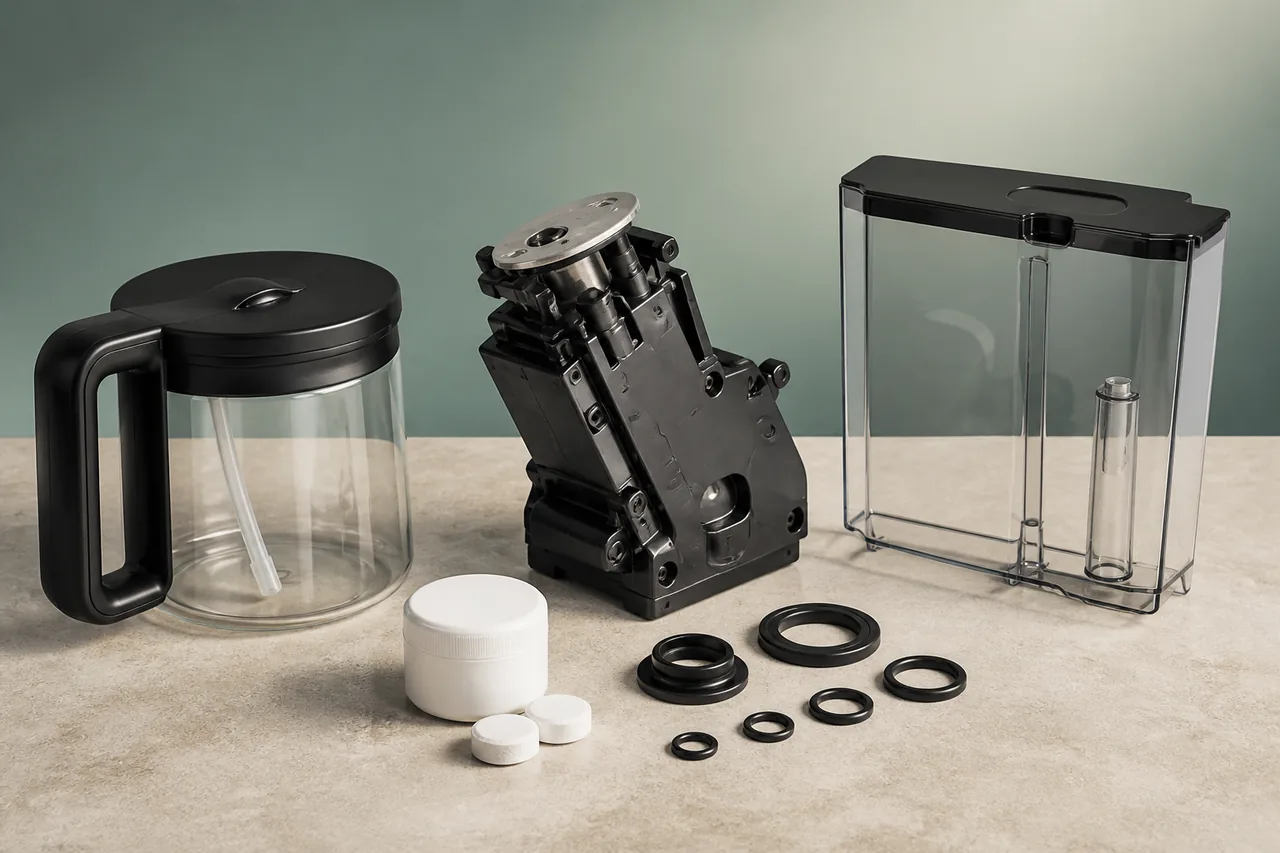
Milk-circuit cleaner sachets
Official milk-circuit cleaner sachets reference CA6705/10, explicitly listed by Philips for SM6585/00. Compare the complete model code before ordering.
Treat the display or symptom as a clue, not as proof that a pump, grinder or board must be replaced. Change one user-accessible condition at a time and let every shutdown finish.
Before checking Saeco GranAroma SM6585/00
- Keep water out of the bean hopper, grinder and electrical openings. Never reach inside a running grinder or force a hot, pressurised component.
What this symptom can mean on Saeco GranAroma SM6585/00
4 checks for Saeco GranAroma SM6585/00, starting with Confirm the pattern
- Confirm the pattern
Milk fats and proteins restrict the small air-and-milk passages, reducing the air mixed into the drink.
- Prepare safely
Finish the automatic shutdown, unplug the machine and let hot surfaces cool. Remove only the tank, tray, brew group or cleaning accessory named by the manufacturer.
- Apply the official check
Use refrigerator-cold milk, rinse the tube and cappuccinatore after every use, then run the milk-circuit cleaning program with the Philips-listed cleaner.
- Retest once
Prepare one small milk drink and compare texture. Good flow but no foam after cleaning needs support rather than stronger chemicals.
When to stop checking Saeco GranAroma SM6585/00
- Stop for a harsh grinder noise, repeated electrical error, uncontrolled leak, burning smell or a symptom that returns after the one official retest.
Next step
After checking Saeco GranAroma SM6585/00: repair, part or service?
Treat “Saeco GranAroma SM6585 milk foam is weak” as a condition to verify. The first of the 4 documented checks is “Confirm the pattern”; its result guides what follows.
Finish the checks before buying
Complete the Saeco GranAroma SM6585/00 sequence, starting at “Confirm the pattern”. When the symptom clears without a remaining alert, no replacement is indicated.
Arrange a diagnosis if a stop condition appears
Do not condemn Saeco GranAroma SM6585/00 from “Saeco GranAroma SM6585 milk foam is weak” alone. Stop at the warnings above and let a qualified diagnosis establish whether repair remains safe and proportionate.
Sources used
- Philips · source in French — Philips's official material documents “Saeco GranAroma SM6585 milk foam is weak” and the user checks retained here.
Last checked: 30 August 2026