
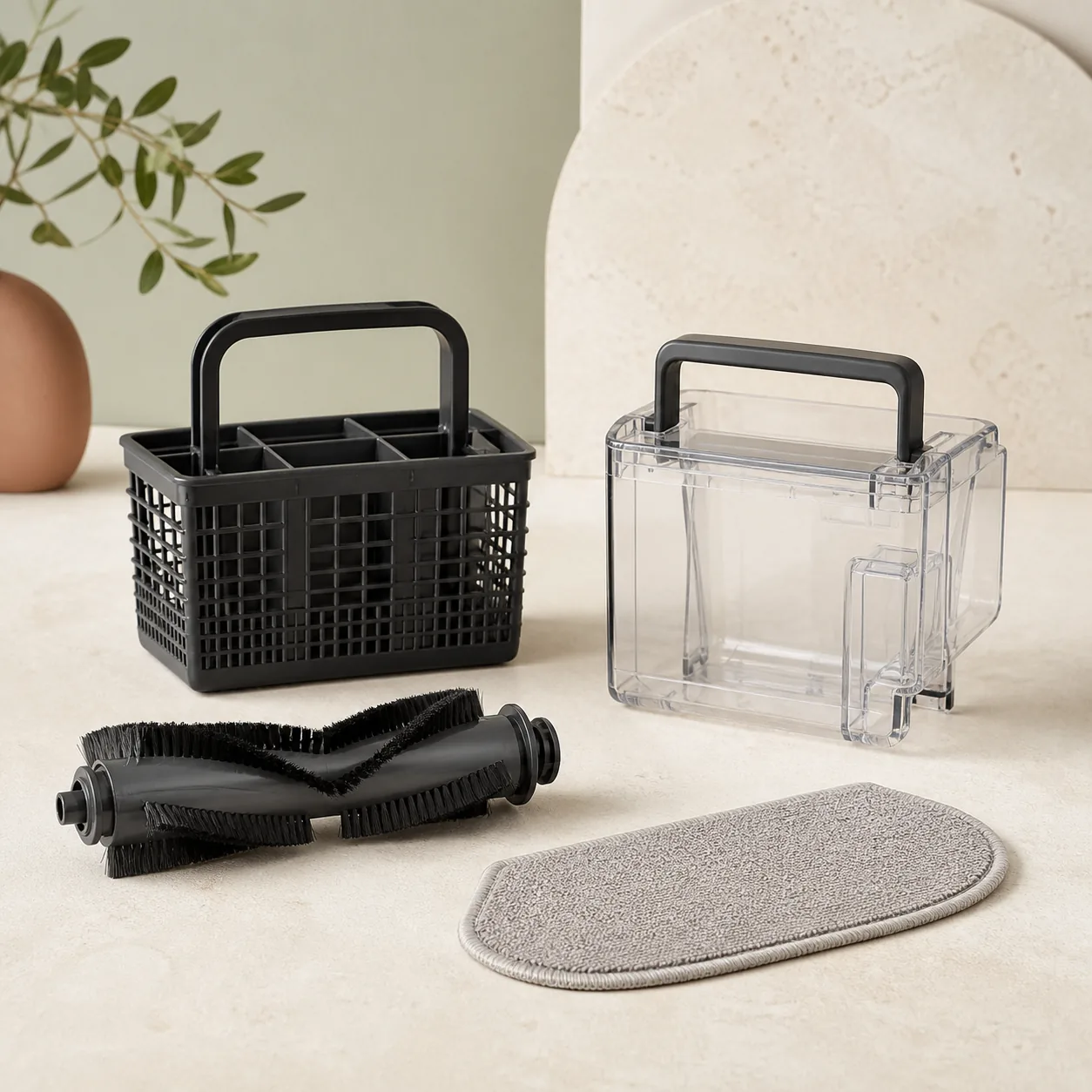
A hard or sharp object can lodge in the brushroll, nozzle chamber or inlet hose and change the sound before suction fully stops. Turn power off, remove the brushroll cover, brushroll and dirty tank, clear only visible debris from the documented openings and reassemble before one test. Switch the cleaner off before removing tanks, filter, cover or brushroll. Keep charging contacts and the motor housing dry and use only the cleaning liquid named by Shark. Check the light pattern, timing and selected mode before changing settings. One controlled test is more useful than repeated resets or an unverified replacement part.
Models covered
- Shark HydroVac MessMaster WD260 · WD260
- Shark HydroVac MessMaster WD261 · WD261
- Shark HydroVac MessMaster WD265 · WD265
Safety first
- Switch the cleaner off before removing tanks, filter, cover or brushroll. Keep charging contacts and the motor housing dry and use only the cleaning liquid named by Shark.
What the symptom may indicate
Checks in the right order
- Confirm the exact state
noise changes after picking up a hard object. A hard or sharp object can lodge in the brushroll, nozzle chamber or inlet hose and change the sound before suction fully stops.
- Apply the official check
Turn power off, remove the brushroll cover, brushroll and dirty tank, clear only visible debris from the documented openings and reassemble before one test.
- Read the result
If the expected state returns, no part decision is needed. If the same symptom persists after one careful check, keep the model, light pattern and timing and contact the manufacturer rather than repeating resets.
Stop and get qualified help when
- Stop for smoke, burning smell, battery heat, damaged charging contacts, leaking toward electrical parts or a brushroll that remains locked after visible debris is removed.
Next step
Repair, replace a part, or arrange a diagnosis?
Use the checks and stop conditions above to choose a cautious next step. A symptom alone never proves that the appliance has failed.
Resolve it without buying anything
Complete the 3 user-accessible checks in order. If normal operation returns and no warning sign remains, no replacement is indicated.
Replace only the confirmed part
If the checks isolate a worn or blocked component, match its complete reference to the exact appliance model before ordering.
This guide does not identify a replacement part. Do not order a generic component from the symptom alone.
Arrange a diagnosis before replacing the appliance
Stop at any warning sign listed above. A qualified diagnosis should confirm that repair is unsafe, unavailable or uneconomical before an appliance replacement is considered.
Sources used
- Shark — Shark's official documentation describes “noise changes after picking up a hard object” and the bounded user action retained on this page.
Last checked: 30 August 2026