
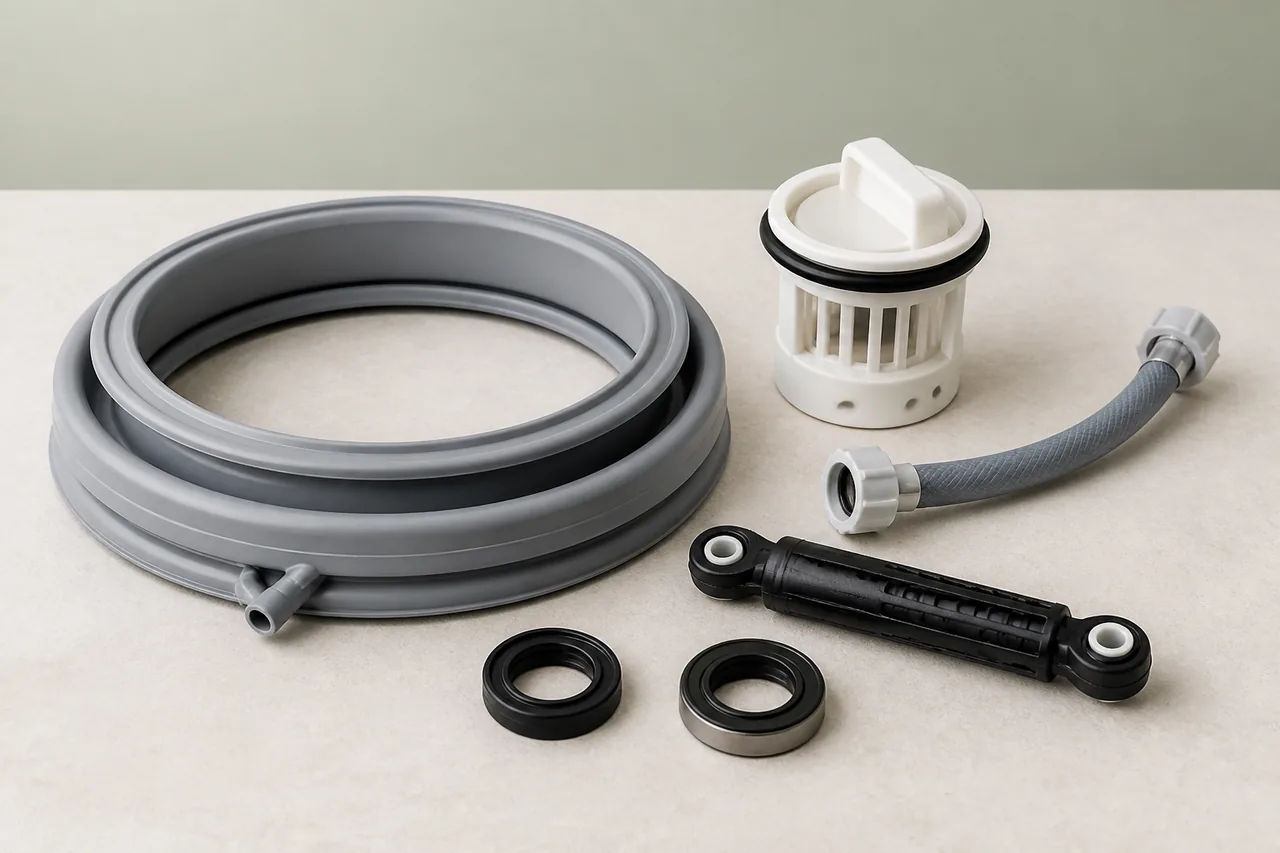
A Whirlpool washer that neither drains nor reaches full spin needs a symptom-first check. A door that is not latched, an unbalanced load or a low-spin cycle can prevent or reduce spinning, while excess detergent foam and a kinked, blocked or incorrectly positioned drain hose can leave water behind. Some front-load models also have a user-accessible pump filter, but others do not; use the full model number and manual before opening any access panel. Clearing the installation and load causes first prevents an unnecessary pump or control-board purchase.
Safety first
- Unplug before touching the hose or filter, let hot wash water cool and prepare a shallow tray because opening a pump filter can release a large volume of water.
What the symptom may indicate
Checks in the right order
- Check the door, cycle and load
Confirm the door or lid is fully closed, redistribute a bunched load and check that Low Spin or No Spin was not selected. Use Drain & Spin only if the manual allows it for the load.
- Reduce excess suds
Use only the recommended HE detergent and dose for its concentration, water hardness and load. Allow an automatic suds-reduction cycle to finish instead of repeatedly adding programmes.
- Inspect the drain-hose installation
Unplug the washer and inspect the accessible hose for kinks or clogs. Whirlpool gives a maximum standpipe height of 96 inches; confirm your model’s minimum height and insertion depth in its installation guide.
- Clean only an accessible pump filter
If the manual shows a user-accessible pump filter, drain residual water as instructed and remove lint or small objects. Refit the cap and seal fully before running a short test.
Stop and get qualified help when
- Stop for a locked door with water inside, damaged wiring, burning smell, active leak, inaccessible filter or repeated failure after the documented checks; arrange Whirlpool service.
Next step
Repair, replace a part, or arrange a diagnosis?
Use the checks and stop conditions above to choose the least costly safe next step. A symptom alone never proves that the appliance has failed.
Resolve it without buying anything
Complete the 4 safe checks in order. If normal operation returns and no warning sign remains, no replacement is indicated.
Replace only the confirmed part
If the checks isolate a worn or blocked component, match its complete reference to the exact appliance model before ordering.
This guide does not identify a replacement part. Do not order a generic component from the symptom alone.
Arrange a diagnosis before replacing the appliance
Stop at any warning sign listed above. A qualified diagnosis should confirm that repair is unsafe, unavailable or uneconomical before an appliance replacement is considered.
Stop and get qualified help when : 1
Compare replacement appliances on AmazonPaid Amazon search. Results are suggestions, not a diagnosis or a recommendation to discard the appliance.Sources used
- Whirlpool — Whirlpool Product Help lists the door, unbalanced load, spin speed, excess suds, drain-hose installation and an accessible pump filter as distinct causes.
Last checked: 29 August 2026