
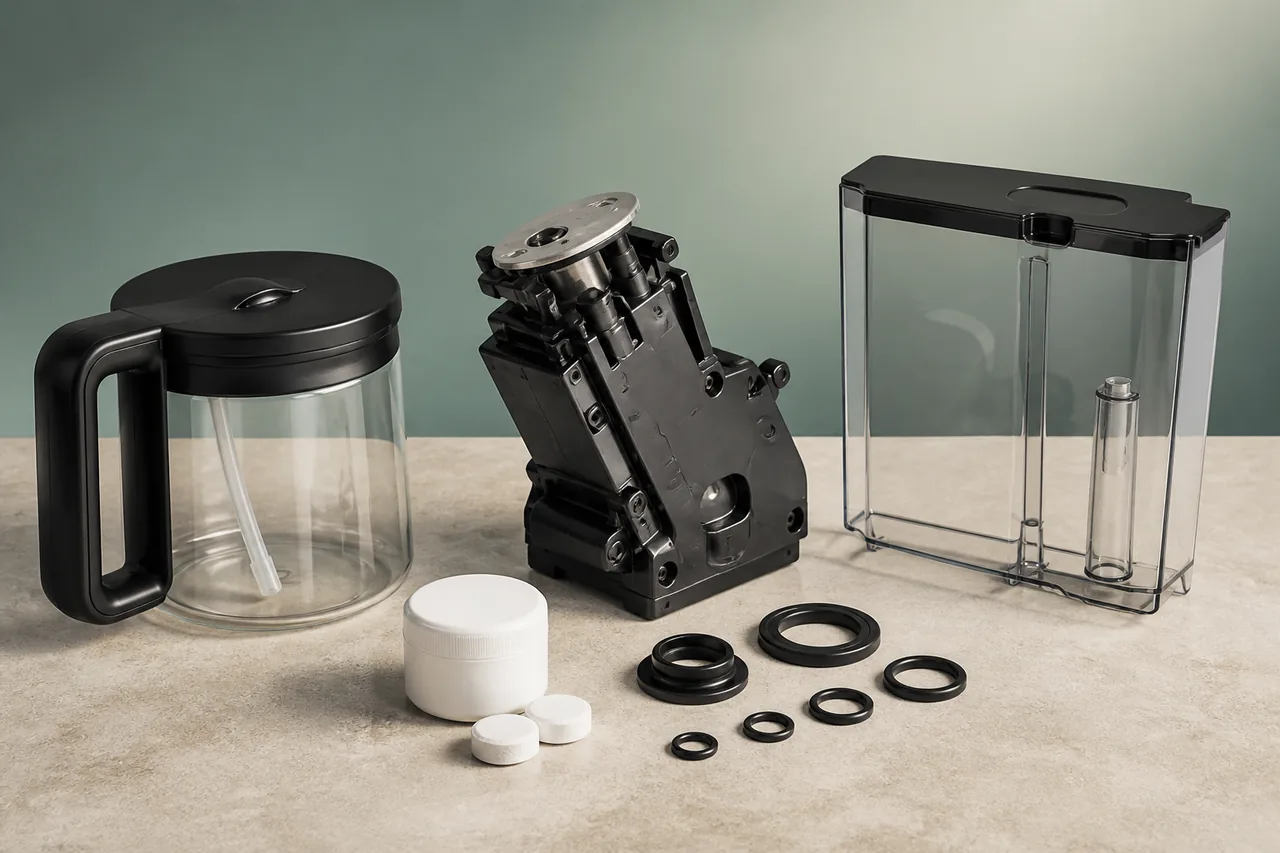
Models covered
This guide concerns the TIE20119, TIE20301, TIS30129RW and TIS30321RW. Start by identifying which drink is disappointing: plain coffee and a milk-based drink are not the same temperature problem. Record whether it happens from the first cup or only after adding milk. A lukewarm result alone cannot identify a failed heater.
The manuals reviewed do not provide a universal coffee-temperature adjustment for these families, so do not copy a button sequence from another Bosch machine. The useful next step is a comparable observation, followed by the milk-specific checks only when that is the affected drink.
Before checking Bosch VeroCup 100 TIS30129RW
- Do not touch the liquid or steam at the outlet to test its temperature. Leave hot parts to cool before handling them. Never open the housing or put hot water in the water tank to compensate for a cold drink.
What this symptom can mean on Bosch VeroCup 100 TIS30129RW
4 checks for Bosch VeroCup 100 TIS30129RW, starting with Wait for the ready state
- Wait for the ready state
Check the complete E-number, including its suffix. Let the normal start-up finish before preparing a drink. Use the ready indication described in that model's manual; do not interrupt a rinse to obtain a test cup.
- Observe one plain coffee
Prepare your usual plain coffee without changing its strength or volume. Note the result and whether milk was the only difference in the earlier cold drink. This comparison helps describe the fault; it does not certify a component as working or faulty.
- Adjust milk only when relevant
For a cold milk-based drink, follow the quantity and frothing-time guidance in the exact manual. On TIE201/TIE20, Bosch also suggests lukewarm milk when the starting milk is too cold. Do not apply that advice to plain coffee or repeatedly lengthen steaming without checking the recipe.
- Give support a precise description
If plain coffee remains too cool, or the milk-specific adjustment does not help, give Bosch the E-number, affected drink and any displayed warning. Do not buy a heater or change internal settings on that evidence alone.
When to stop checking Bosch VeroCup 100 TIS30129RW
- Stop using the machine if there is an external leak, uncontrolled steam, a burning smell or damage to the cable or plug. Persistent inadequate heating needs authorised assessment, not repeated improvised tests.
Next step
After checking Bosch VeroCup 100 TIS30129RW: repair, part or service?
Treat “Bosch TIE and TIS coffee machines : coffee not hot enough” as a condition to verify. The first of the 4 documented checks is “Wait for the ready state”; its result guides what follows.
Finish the checks before buying
Complete the Bosch VeroCup 100 TIS30129RW sequence, starting at “Wait for the ready state”. When the symptom clears without a remaining alert, no replacement is indicated.
Arrange a diagnosis if a stop condition appears
Do not condemn Bosch VeroCup 100 TIS30129RW from “Bosch TIE and TIS coffee machines : coffee not hot enough” alone. Stop at the warnings above and let a qualified diagnosis establish whether repair remains safe and proportionate.
Sources used
- Bosch — Bosch's official model support, Ergebnisproblem for TIE20119 states exactly: “Kaffeetemperatur unzureichend (nicht heiß)”.
- Bosch — Bosch's official model support, Ergebnisproblem for VeroCup 100 TIS30129RW states exactly: “Kaffeetemperatur unzureichend (nicht heiß)”.
- Bosch · source in Spanish — Bosch's official model support, Ergebnisproblem for TIS30321RW states exactly: “Kaffeetemperatur unzureichend (nicht heiß)”.
- Bosch — TIE201 manual: drink controls and basic settings, pp. 43-46; milk temperature and foam troubleshooting, pp. 51-52. Linked by Bosch's TIE20119/01 support page.
- Bosch — TIE20 manual linked by Bosch TIE20301/02: in-cup frothing, pp. 46-48; basic settings, pp. 49-50; milk troubleshooting, pp. 57-58.
- Bosch — TIS3.1 manual linked by Bosch TIS30129RW/02: drinks and frothing time, pp. 13-14; milk-system cleaning, p. 19; troubleshooting, pp. 23-24.
- Bosch — TIS3.3 family manual: in-cup milk drinks and frothing time, pp. 13-14; settings, pp. 16-18; milk-temperature and frother troubleshooting, p. 24. Check the exact E-number before following control sequences.
Last checked: 5 September 2026