
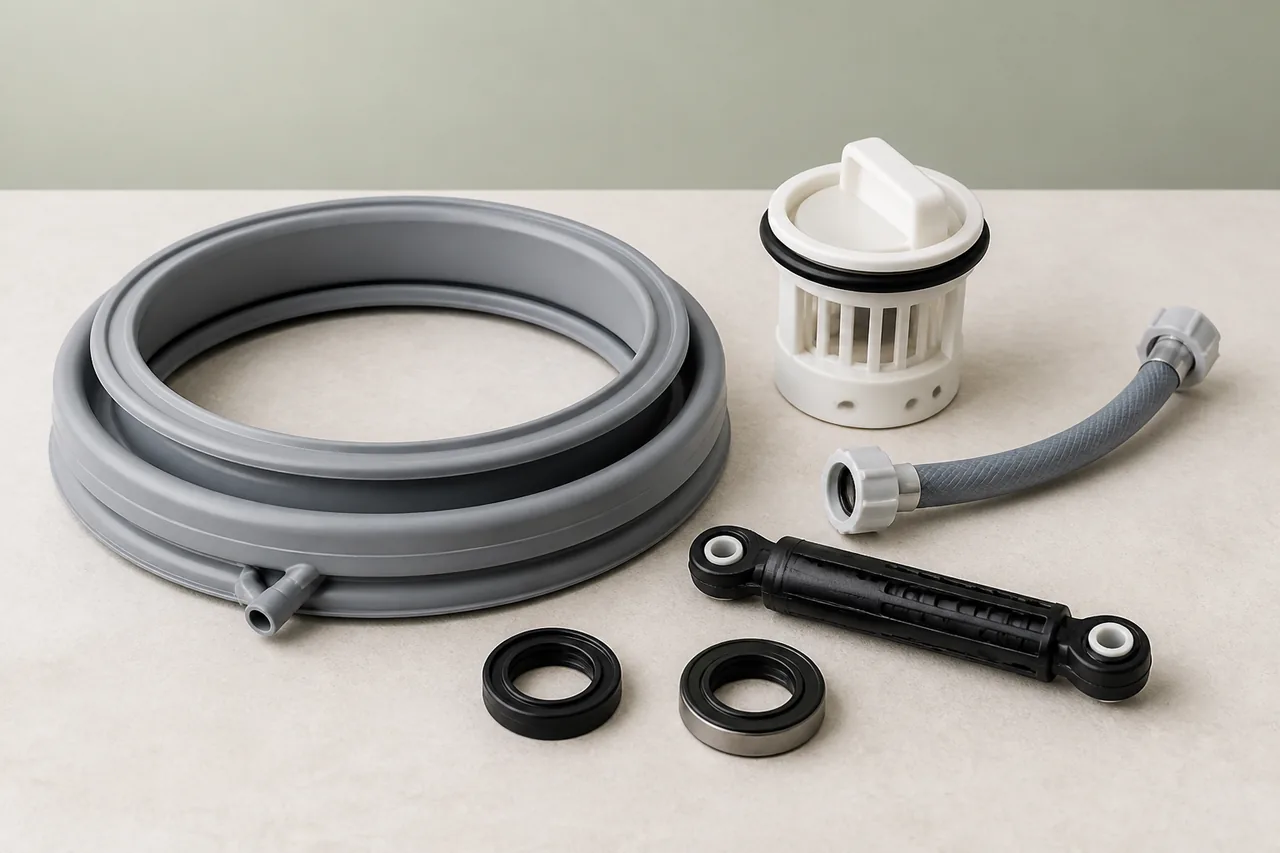
A knocking sound behind the EWF695 that follows draining or spin can be a loose external hose striking the cabinet or wall. Keep the diagnosis at user level: record the exact stage, change one condition at a time and do not open the cabinet. Pump pulses and cabinet movement make an unsecured hose swing, especially when the appliance sits too close to the wall. Hold no moving parts: locate the noise visually at the external hose. Metal scraping inside the drum or grinding at the pump is different. Unplug, leave enough service loop, secure the hose in its guide without pinching it and move the empty washer slightly away from wall or furniture. Run one drain while observing from outside. If knocking remains inside the appliance or any leak appears, stop and request service.
Models covered
Safety first
- Cancel the programme, unplug the washer, close the taps and let retained water cool. Never force a locked door or lid, bypass an interlock or remove a panel.
What the symptom may indicate
Checks in the right order
- Confirm before acting
Pump pulses and cabinet movement make an unsecured hose swing, especially when the appliance sits too close to the wall.
- Make the appliance safe
Cancel the programme, unplug the washer, close the taps and let retained water cool. Never force a locked door or lid, bypass an interlock or remove a panel.
- Apply the official check
Unplug, leave enough service loop, secure the hose in its guide without pinching it and move the empty washer slightly away from wall or furniture.
- Retest once and decide
Run one drain while observing from outside. If knocking remains inside the appliance or any leak appears, stop and request service.
Stop and get qualified help when
- Stop for water under the washer, a damaged hose, burning smell, a hot plug, violent metal noise or a symptom that returns after the single documented test.
Next step
Repair, replace a part, or arrange a diagnosis?
Use the checks and stop conditions above to choose a cautious next step. A symptom alone never proves that the appliance has failed.
Resolve it without buying anything
Complete the 4 user-accessible checks in order. If normal operation returns and no warning sign remains, no replacement is indicated.
Replace only the confirmed part
If the checks isolate a worn or blocked component, match its complete reference to the exact appliance model before ordering.
This guide does not identify a replacement part. Do not order a generic component from the symptom alone.
Arrange a diagnosis before replacing the appliance
Stop at any warning sign listed above. A qualified diagnosis should confirm that repair is unsafe, unavailable or uneconomical before an appliance replacement is considered.
Sources used
- Electrolux — Electrolux's official support material documents this exact symptom path for EWF695; the procedure here keeps only user-accessible checks.
Last checked: 30 August 2026