
Models covered
Parts
Parts and accessories for Kärcher FC 7 Cordless
Compare the documented references, including 2.055-006.0. Open the part details to check the complete model code, then view the retailer’s offer.
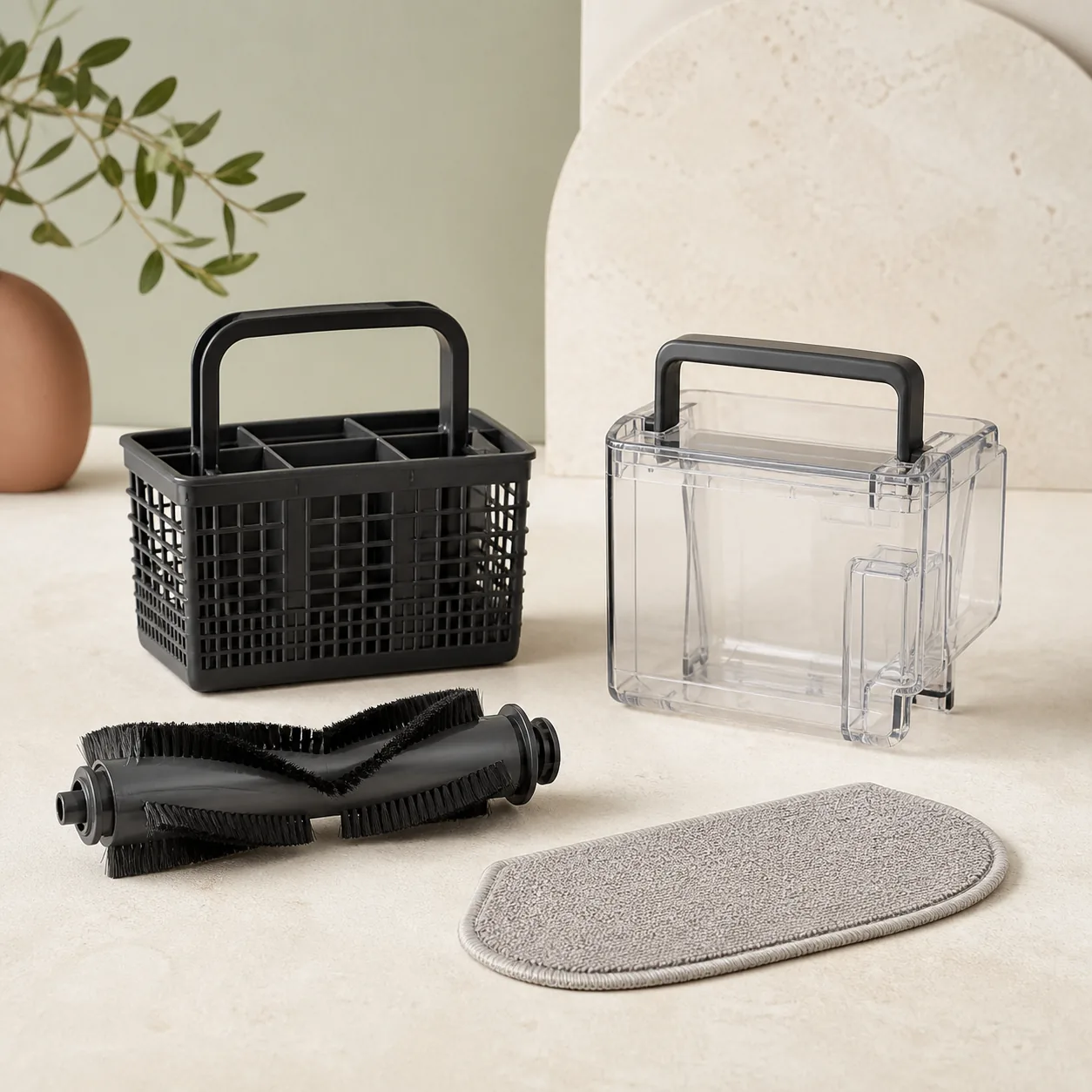
Kärcher Yellow multi-surface FC roller set
Kärcher official yellow multi-surface fc roller set, reference 2.055-006.0. Compatibility is published only for the exact appliance codes explicitly listed by the manufacturer source.
Separate tank seating, liquid flow, suction and brush drive before ordering a part. Empty dirty water, keep electrical areas dry and run only the short test described for this exact model family. What the alert means: Dry roller fibres hit the floor unevenly, and rollers left under load can lose their round profile and create periodic noise. What to distinguish first: Turn each removed roller and look for flat sections; noise that follows roller rotation differs from a constant motor grind. 1.
Confirm the exact symptom — Dry roller fibres hit the floor unevenly, and rollers left under load can lose their round profile and create periodic noise. 2. Prepare safely — Switch off, unplug the charger and empty both tanks before removing a roller, filter or floorhead cover. 3. Apply the official check — Moisten clean rollers evenly, reinstall them on the correct sides and store the FC7 on its parking station without loading the rollers. 4. Interpret one retest — Test on smooth hard flooring. The official Kärcher procedure identifies this exact symptom and supports the checks above.
Before checking Kärcher FC 7 Cordless
- Keep the charging port and motor vents dry, and never clear a blockage while the appliance can start.
What this symptom can mean on Kärcher FC 7 Cordless
4 checks for Kärcher FC 7 Cordless, starting with Confirm the exact symptom
- Confirm the exact symptom
Dry roller fibres hit the floor unevenly, and rollers left under load can lose their round profile and create periodic noise.
- Prepare safely
Switch off, unplug the charger and empty both tanks before removing a roller, filter or floorhead cover.
- Apply the official check
Moisten clean rollers evenly, reinstall them on the correct sides and store the FC7 on its parking station without loading the rollers.
- Interpret one retest
Test on smooth hard flooring. Replace verified rollers if flat spots remain; stop for grinding that continues without rollers.
When to stop checking Kärcher FC 7 Cordless
- Stop for a damaged tank, battery heat, electrical smell, persistent leak or an error that returns after one clean test.
Next step
What the Kärcher FC 7 Cordless checks lead to
The 4-check path for “Kärcher FC7 rattles loudly: dry or deformed rollers” starts with “Confirm the exact symptom” and separates a resolved condition, an identified part and a case requiring service.
No purchase after a successful check
Follow the Kärcher FC 7 Cordless controls in order. If “Confirm the exact symptom” and the remaining checks restore normal operation with no warning, stop without replacing anything.
Escalate only on the documented warning signs
For “Kärcher FC7 rattles loudly: dry or deformed rollers”, use the stop conditions above rather than the symptom by itself. Professional confirmation should precede any decision to replace Kärcher FC 7 Cordless.
Sources used
- Kärcher — The official Kärcher procedure identifies this exact symptom and supports the checks above.
Last checked: 30 August 2026