
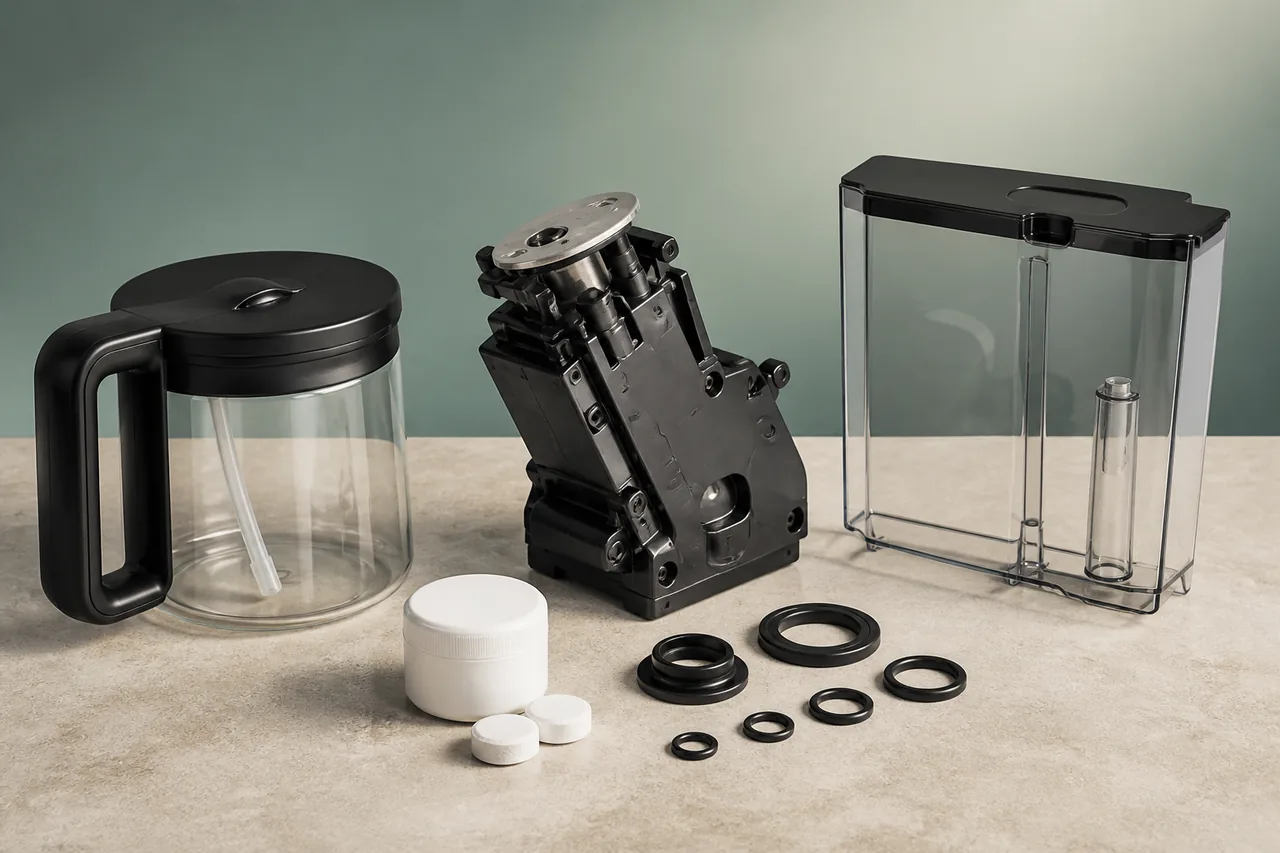
Models covered
Sage BES450 / Sage BES870 — Too much or too little espresso reaches the cup. Preserve the exact display, drink and timing, then perform the official check once.
Before checking Sage Coffee machine
- Keep hands away from hot water, steam, the grinder and moving brew parts. Switch off and unplug before removing a user-removable part; never open the housing, boiler, pump or grinder.
What this symptom can mean on Sage Coffee machine
4 checks for Sage Coffee machine, starting with Capture the starting point
- Capture the starting point
Photograph or note “Too much or too little espresso reaches the cup”, the selected drink and what happened immediately before it.
- Make the machine safe
Keep hands away from hot water, steam, the grinder and moving brew parts. Switch off and unplug before removing a user-removable part; never open the housing, boiler, pump or grinder.
- Follow the manufacturer check
Keep one basket and dose fixed, compare the programmed volume, then adjust only grind or amount; use the manual’s volume reset or reprogramming path only if needed.
- Retest once and decide
If the exact symptom clears, observe one normal drink. If it returns, preserve the evidence and contact authorised support instead of repeating resets or guessing a part.
When to stop checking Sage Coffee machine
- Stop immediately for a hot plug, damaged cable, burning smell, smoke, water near electrical parts, uncontrolled steam, a dry-running pump, a part moving under pressure or the exact fault returning after one documented test.
Next step
What the Sage Coffee machine checks lead to
The 4-check path for “Sage BES450 / Sage BES870: Too much or too little espresso reaches the cup” starts with “Capture the starting point” and separates a resolved condition, an identified part and a case requiring service.
No purchase after a successful check
Follow the Sage Coffee machine controls in order. If “Capture the starting point” and the remaining checks restore normal operation with no warning, stop without replacing anything.
Escalate only on the documented warning signs
For “Sage BES450 / Sage BES870: Too much or too little espresso reaches the cup”, use the stop conditions above rather than the symptom by itself. Professional confirmation should precede any decision to replace Sage Coffee machine.
Sources used
- Sage — Sage's official manual or model page documents “Too much or too little espresso reaches the cup” and the bounded user procedure retained here.
- Sage — Sage's official manual or model page documents “Too much or too little espresso reaches the cup” and the bounded user procedure retained here.
- Sage — Sage's official manual or model page documents “Too much or too little espresso reaches the cup” and the bounded user procedure retained here.
- Sage — Sage's official manual or model page documents “Too much or too little espresso reaches the cup” and the bounded user procedure retained here.
Last checked: 30 August 2026